Trading Ideas
- 4.3
- Rating
- 10.00K
- Installs
- Free
- Price

 Analysis by App-foxy
Trading Ideas is a free news and magazines app from Life Water Media that focuses on one useful promise: helping me notice market movement before it gets buried under a large general-news feed. Instead of treating finance as a long list of unrelated headlines, it brings together market moves, trends, alerts, news, and deeper intelligence in a compact experience. That focus makes it appealing to anyone who wants a quicker way to keep an eye on financial developments without opening a full trading platform.
After spending time with it, I see the app less as a complete replacement for a broker or research terminal and more as a market-awareness tool. Its value is in helping me decide what deserves attention next. The app is free, rated for Everyone, and works on devices running Android 8.0 or later. It is currently at version 1.8.7, which gives the impression of an actively maintained product rather than an abandoned experiment.
The important distinction is that Trading Ideas is built for discovery and awareness, not for placing trades. That difference affects how I would use it every day. I would open it to identify a developing theme, read the surrounding coverage, and then verify any possible action elsewhere. If I wanted charting, order execution, portfolio accounting, or detailed company filings in one place, I would still turn to a dedicated finance service.
You May Also Like

 AccuWeather: Weather Radar
AccuWeather Review: A Quick, Clear Forecast for Everyday Decisions
For everyday plans, the best forecast is the one you can understand quickly. AccuWeather makes rain timing, radar, and local conditions easy to act on, with a few trade-offs.

 Hill Climb Racing
Why Hill Climb Racing Still Turns Crashes Into One More Run
A tiny car, a bumpy hill and one more upgrade: Hill Climb Racing keeps resurfacing because its simple chaos makes every near-miss feel personal.

 AliExpress - Shopping App
AliExpress Makes Global Shopping Feel Personal, but Shoppers Bear the Risk
AliExpress turns a global marketplace into a pocket-sized discovery engine. Its reach is useful, its shopping loop compelling, and its trade-offs easy to miss.

 Lords Mobile: Kingdom Wars
Lords Mobile Is a Kingdom-Building Routine, Not a Quick Match
A case-by-case verdict on the building, battles, device demands, and social commitments that make Lords Mobile rewarding for some players and exhausting for others.

 PDF Scanner app - TapScanner
TapScanner Makes Paperwork Easier to Capture, Check, and Share
TapScanner makes scanning with a phone feel less like a rescue operation and more like a dependable step in getting work done. Its capture tools are useful, though not flawless.

 Block Blast!
 Shows How Much a Puzzle Game Can Leave Out
A quiet grid game shows why puzzle players increasingly value instant clarity, repeatable skill and low-pressure play—and where the genre still needs to catch up.
More From Our News Desk
View All News


Why the market-move focus matters
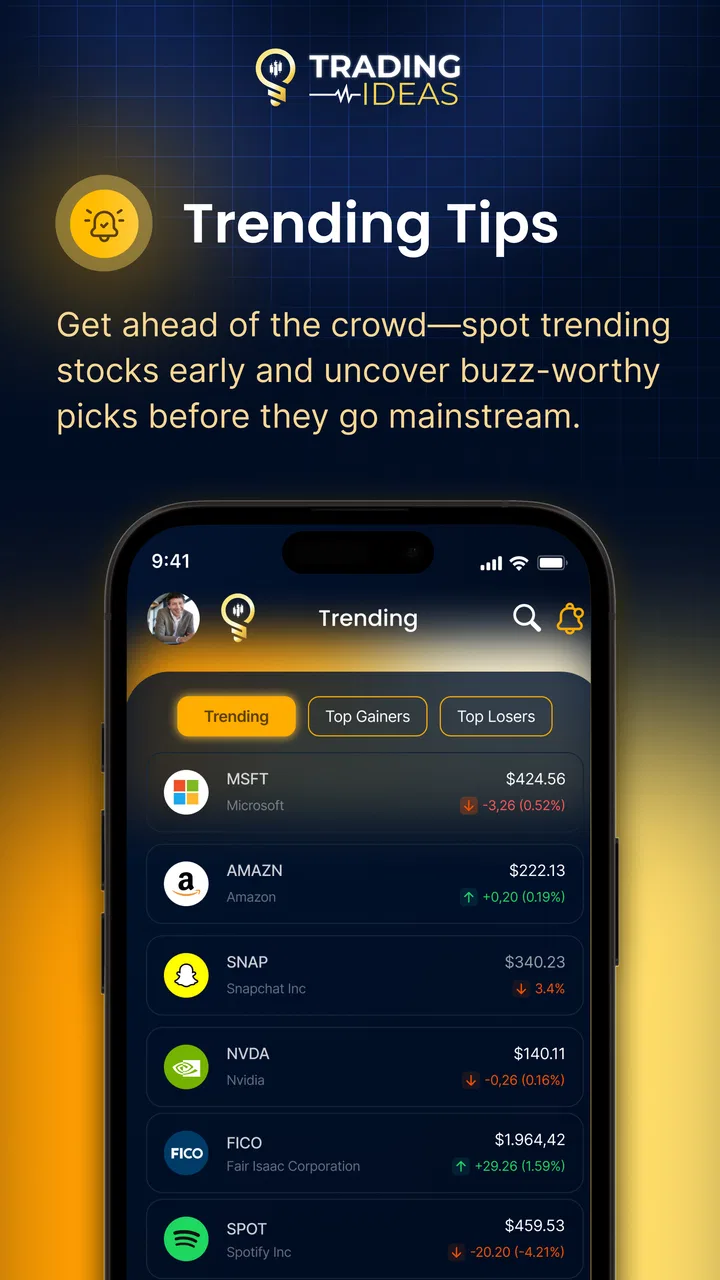
The app’s central capability is its attention to market moves and trends. That sounds simple, but it changes the way a finance app fits into a routine. A broad news app may show politics, technology, entertainment, and business in the same stream. A trading platform may show prices and charts first. Trading Ideas sits between those approaches by making market-related developments the starting point.
In practice, that means I can use it when I do not yet know exactly what I am looking for. I might be aware that a sector is active, that sentiment has shifted, or that an important story is developing, but I may not have a particular company in mind. A focused feed can help turn that vague awareness into a more specific research question.
This is especially useful for people who follow several markets but do not want to maintain a complicated watchlist. Instead of checking many individual symbols one by one, I can begin with the broader movement and then decide whether a particular company, industry, or event deserves closer attention. That workflow is more exploratory than the usual price-alert routine.
The app’s short description, “Trading Ideas,” also explains the intended mindset. It is not presenting itself as a personal financial adviser. I read its material as prompts for further investigation, not as instructions to buy or sell. That is an important habit because a fast alert can be useful while still being incomplete, delayed in context, or unsuitable for my own risk level.
Alerts are most useful when they reduce checking
Instant alerts are potentially the most practical part of the experience. Their real benefit is not simply speed; it is reducing the number of times I need to interrupt my day to check a market feed manually. If I am working, commuting, or handling family responsibilities, I can use an alert as a signal to return to the app when something relevant has changed.
I would not treat every notification as urgent. A better approach is to use an alert as the first step in a small decision process: read the headline, inspect the related context, decide whether it affects my watchlist or interests, and only then open a separate research or trading tool. This prevents the notification itself from becoming an impulsive trading trigger.
There is also a trade-off. Alerts can improve awareness, but too many of them can make the app feel noisy and make every market movement seem equally important. I would keep notifications limited to the information I genuinely want during the day. For someone who prefers a quiet phone and checks financial news only once in the evening, the alert-centered approach may be less attractive.
How I would use it in a normal week
My preferred workflow would begin with a short morning check rather than leaving the app open continuously. I would scan the main market developments, note any trend that connects with companies or sectors I already follow, and save the questions that need more research. The purpose of that first visit is orientation: understanding what has changed since the previous check.
Later, I would return only when an alert or a developing story justified it. Instead of jumping straight from a notification to a trade, I would compare the story with price action, company information, and my own plan in another service. Trading Ideas is helpful at the point where I need to choose what to investigate; it is not the entire investigation.
One non-obvious advantage of this workflow is that it can reduce random browsing. General finance websites often encourage me to move from one headline to another without a clear objective. A focused app can work better when I give each session a question, such as whether a sector trend is broad or limited to one company, whether an alert changes a long-term thesis, or whether a story is merely short-term noise.
I would also use the deeper intelligence material differently from the instant updates. Alerts are for awareness, while longer analysis is better suited to a quiet review session. Mixing both at the same speed can make careful research feel like another stream of notifications. Separating quick checks from deliberate reading is one of the easiest ways to get more value from the app.
A realistic example: the busy workday
Imagine that I follow technology companies but have no time to monitor business news while working. An alert arrives during lunch indicating that a market trend or related story deserves attention. I would read the initial item in Trading Ideas, identify the companies or themes mentioned, and write down what needs verification. I would not place an order from that first impression.
In the evening, I could compare the story with a company’s recent announcements, price chart, and financial information in the tools I already use. If the story still mattered after that check, the app would have done its job: it helped me find a worthwhile research path without requiring me to search the entire financial internet from scratch.
This scenario shows both the strength and the boundary of the product. It can shorten the distance between “something may be happening” and “I know what to examine.” It does not remove the need for judgment, confirmation, or a personal risk plan. Readers looking for automatic decisions may find that boundary frustrating, but cautious users should see it as a healthy separation.
Where it stands beside familiar alternatives
Compared with a general news app, Trading Ideas should feel more relevant to a market-focused reader because the subject matter is narrower. A general app is better when I want one place for world news, local reporting, culture, and business. Trading Ideas becomes more useful when I want to filter out most of that unrelated material and concentrate on financial developments.
Compared with a broker’s app, the difference is even clearer. A broker is designed around accounts, holdings, orders, balances, and execution. Trading Ideas is better suited to the earlier stage, when I am trying to understand what is moving and why it might matter. I would not replace my broker with it, and I would be suspicious of any workflow that treated a news alert as a substitute for an order screen.
Compared with a charting service, the app appears more approachable for idea discovery. Charting tools are excellent when I already have a symbol and want technical detail. Trading Ideas makes more sense when I want to begin with a story, a trend, or a change in market attention. The trade-off is that users who depend on advanced chart layouts, indicators, or precise technical studies may need another app open beside it.
It also differs from a long-form research platform. Deep research services are valuable when I need structured financial statements, analyst material, company documents, or extensive historical context. Trading Ideas can point me toward a subject, but I would still use those specialized resources before making a serious investment decision.
That comparison helps define the audience. The app is not trying to be every financial tool at once. Its strongest role is as a focused layer between raw headlines and detailed research. For me, that is a sensible role, provided I do not expect it to manage the entire investment process.
The friction I would keep in mind
The first limitation is the risk of confusing speed with completeness. Instant information feels valuable because it arrives quickly, but a fast headline may leave out the background needed to interpret it. I would always check whether a story is genuinely new, whether it affects the broader market, and whether the source provides enough detail for the decision I am considering.
The second limitation is attention. A market-focused feed can make me feel that I must react to every movement. That is not a problem unique to this app, but the concentrated subject matter makes it more noticeable. Users with short-term trading habits may appreciate the constant awareness, while long-term investors may prefer to mute some notifications and use the app only for scheduled reviews.
The third trade-off is the need to move between tools. Trading Ideas can help with discovery and context, but serious verification may require a broker, a charting app, an earnings source, or a portfolio tracker. That extra step is not necessarily a flaw; it is the price of using a specialized news tool. Still, people who want one integrated dashboard should choose a broader financial platform instead.
I would also avoid treating the app’s ideas as personalized recommendations. The material may help me form a question, but it cannot know my income, time horizon, tax situation, existing holdings, or tolerance for loss. The responsible use case is to let it improve my awareness while keeping the final decision process separate and personal.
Who will get the most from it
Trading Ideas is a good match for a curious investor who wants a dedicated stream of market developments without committing to a complex terminal. It can also suit someone who follows several sectors and needs help spotting which themes deserve research. Because it is free, it is easy to test as a secondary app alongside an existing broker or news reader rather than making a costly switch.
It may be particularly useful for people who have limited time. A short scan can reveal where attention is concentrated, and alerts can bring important developments back to me instead of requiring constant manual checking. The best results will come from users who are comfortable treating the app as an information filter and who are willing to verify ideas before acting.
Beginners may appreciate the focused subject matter, but I would still recommend learning basic investing concepts before relying heavily on market alerts. A beginner who sees every headline as a prediction could make poor decisions quickly. The app is easier to use responsibly when the reader understands that news explains possibilities, not guaranteed outcomes.
Experienced traders may find it useful as an additional source of ideas, especially when their main platform is optimized for execution rather than discovery. However, users who require professional-grade analysis, extensive historical data, or highly customizable technical tools will probably want something more specialized. The app can complement those tools, but it is unlikely to replace them.
Its Everyone content rating makes it broadly accessible, but accessibility should not be confused with suitability for every financial goal. Someone saving for a long-term objective may gain more from a disciplined portfolio system than from frequent market updates. In that case, the app could be used sparingly, or skipped entirely, to avoid unnecessary noise.
What the current release tells me
The app reached the market on August 15, 2025, and its current version is 1.8.7. I mention that because release maturity matters for a news product: readers want an experience that feels current and maintained. The store presence shows 10K+ installs, with a 4.2 average from 24 ratings and 7 reviews. Those figures suggest early interest, although they are still a small sample from which to draw broad conclusions.
I would therefore judge it by fit rather than popularity. If I need a narrow, alert-friendly way to notice market stories, the app has a clear purpose. If I need execution, portfolio management, or a full research library, I would pair it with a more complete service. The free price makes that trial-and-combine approach straightforward.
My final view is positive but measured. Trading Ideas works best when I use it as a starting point: notice a move, understand the theme, form a research question, and verify the answer elsewhere. Its strongest contribution is not telling me what to trade; it is helping me decide what deserves my attention. For a reader who wants faster market awareness without pretending that alerts replace judgment, it is a worthwhile free addition to a financial-news routine.
FAQs for Trading Ideas
01What is Trading Ideas and how does it work?
Trading Ideas is a mobile application designed for both novice and experienced traders. It provides users with curated trading strategies, market insights, and real-time data to make informed investment decisions. The app integrates with various trading platforms, allowing users to execute trades directly from the app interface.
02Is Trading Ideas suitable for beginners?
Yes, Trading Ideas is beginner-friendly. It offers educational resources and tutorials to help new traders understand market trends and trading strategies. Additionally, the app provides real-time support and community forums where beginners can seek advice and share experiences with more seasoned traders.
03What features does Trading Ideas offer to enhance trading?
Trading Ideas offers a range of features including real-time market analysis, personalized trading strategy suggestions, and push notifications for market alerts. It also provides users with a portfolio tracker, news updates, and integration with popular trading platforms to streamline the trading process.
04Are there any subscription fees or in-app purchases?
Trading Ideas offers both free and premium versions. The free version provides basic features, while the premium subscription unlocks advanced tools such as personalized trading signals, in-depth market analysis, and ad-free usage. Users can choose a monthly or annual subscription plan based on their trading needs.
05Is Trading Ideas secure and reliable?
Yes, Trading Ideas prioritizes user security and data protection. The app employs encryption and secure authentication methods to ensure user data is safe. Additionally, it partners with reputable trading platforms and financial institutions to provide reliable market data and trading capabilities.
Pros
- User-friendly interface for easy navigation.
- Real-time market updates and alerts.
- Comprehensive analysis tools available.
- Customizable watchlists for tracking stocks.
- Educational resources for beginners.
Cons
- Requires stable internet connection.
- Some features locked behind paywall.
- Occasional delays in data updates.
- Limited customer support options.
- High battery consumption on mobile.

Trading Ideas
Gallery